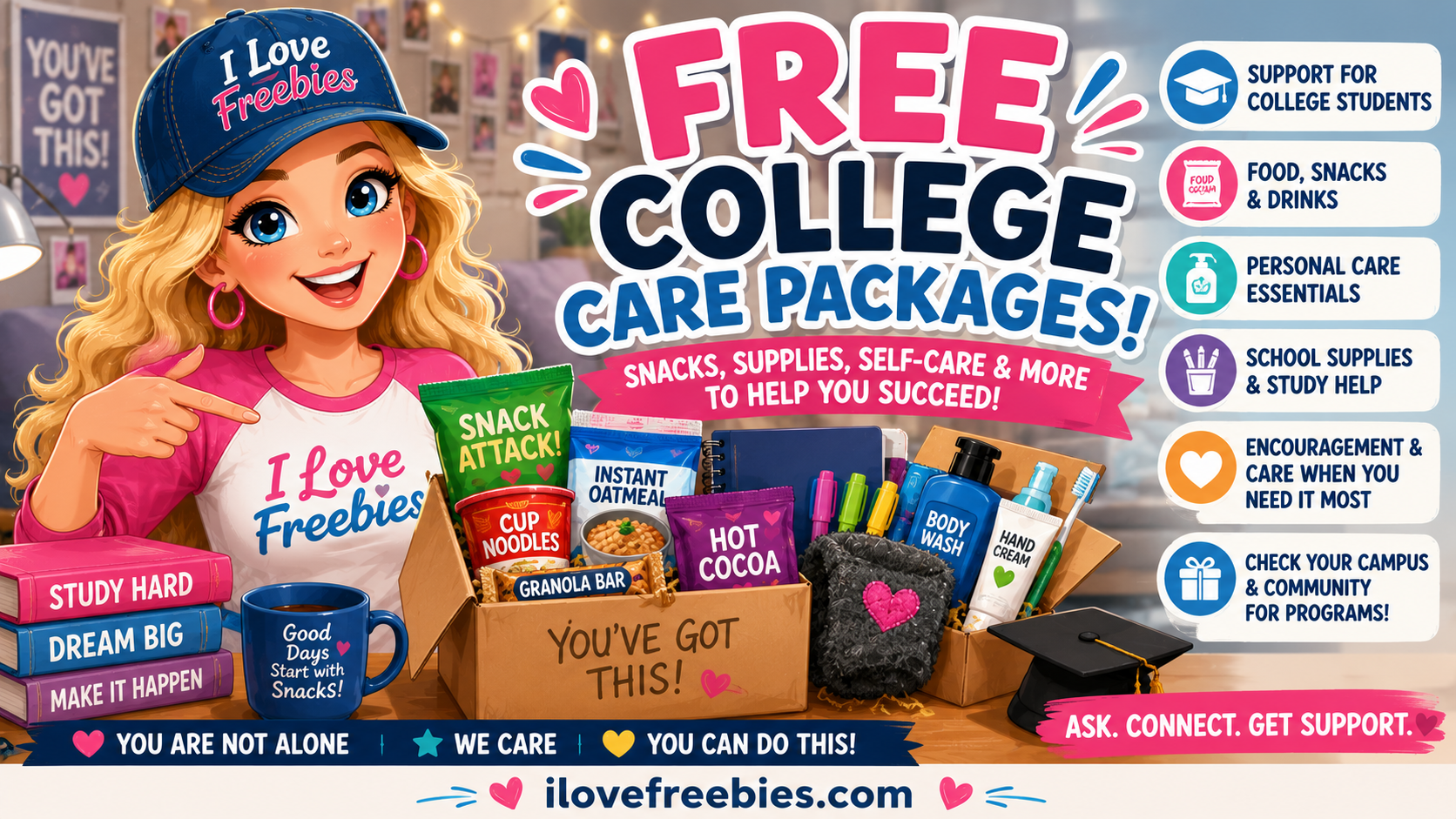
Free college care packages may include snacks, groceries, toiletries, school supplies, cold-weather items, or encouraging notes—but there is no nationwide program that sends a package to every college student.
Most legitimate opportunities are organized by individual colleges, campus pantries, residence-life offices, nonprofits, military-support organizations, faith groups, or local businesses. Availability, eligibility, contents, and pickup or shipping rules vary.
Start With Student Support
The fastest route is usually the college basic-needs center, food pantry, dean of students, or student-affairs office. Even when no boxed care package is available, staff may provide groceries, hygiene products, meal support, emergency aid, or a referral.
1. What Is a College Care Package?
A college care package is a group of practical or comforting items intended to help a student during the school year. A free package may be mailed, distributed at an event, placed in a residence-hall mailbox, or picked up from a campus office.
Contents may include:
- Granola bars, oatmeal, soup, and other shelf-stable food
- Coffee, tea, or drink mixes
- Soap, shampoo, toothpaste, deodorant, and menstrual products
- Laundry or cleaning supplies
- Notebooks, pens, highlighters, and note cards
- Gloves, hats, socks, or other seasonal necessities
- Stress-relief items and encouraging notes
- Coupons or small gift cards when donated
Programs work with donated inventory, so students may not be able to choose brands or receive every requested item. Tell the organizer about food allergies, dietary needs, or ingredient concerns before accepting food.
2. Check the Campus Food Pantry
Many colleges operate a pantry or basic-needs center for currently enrolled students. Some let students select individual products, while others distribute prepacked grocery bags, weekend food bags, hygiene kits, holiday boxes, or emergency packages.
Search the college website for “food pantry,” “basic needs,” “student pantry,” “campus cupboard,” or “food assistance.” Confirm:
- Who qualifies and whether need is self-certified
- How often a student may visit
- Whether an appointment or campus ID is required
- Pickup locations and current hours
- Whether delivery or confidential pickup is available
If campus resources are unavailable, use the Feeding America food-bank finder to locate nearby food banks and partner pantries. Call the local provider for hours, documents, service areas, and student eligibility.
3. Ask the Basic-Needs or Student-Affairs Office
A college basic-needs office may coordinate several forms of help that are not advertised as care packages. Staff may know about emergency food boxes, hygiene kits, winter clothing, finals-week bags, holiday meals, transportation help, technology loans, or supplies for parenting students.
Students can also ask a counselor, academic adviser, financial-aid representative, campus social worker, case manager, or dean of students. A simple message is enough:
“I am looking for current student basic-needs resources, including food, toiletries, school supplies, or care packages. Which campus office or application should I use?”
Students do not need to describe every private detail before asking what programs exist. Use the official student portal, campus email, or recognized application system for documents.
4. Watch for Residence-Hall and Finals-Week Packages
Residence-life staff, libraries, tutoring centers, student government, wellness offices, and campus dining programs sometimes distribute small packages during move-in, midterms, finals, cold-and-flu season, holidays, or high-stress periods.
These may include:
- Move-in welcome bags
- Finals survival kits and snack bags
- Free coffee, breakfast, or hot chocolate
- Highlighters, note cards, and pencils
- Sleep masks, earplugs, fidget items, or stress balls
- Cold-and-flu information or wellness supplies
- Travel snacks for students remaining on campus
Follow residence life, the campus library, student government, counseling services, and the student-events calendar. Quantities may be limited and distributed first come, first served.
5. Check Programs for Specific Student Groups
Some support packages are reserved for students in a particular program or situation. Ask the appropriate campus office rather than assuming that a public-looking giveaway is open to everyone.
- First-generation students: TRIO, opportunity programs, access organizations, and peer-mentoring programs may provide welcome kits, supplies, snacks, or emergency support.
- International students: International offices and host-family programs may offer welcome kits, seasonal items, holiday support, local transportation information, or store gift cards.
- Former foster youth and students experiencing homelessness: Campus liaisons may connect students with move-in supplies, bedding, food, toiletries, transportation, emergency aid, or year-round housing resources.
- Parenting students: Family-resource and childcare offices may provide diapers, wipes, children’s books, household supplies, food, and school materials.
- Scholarship recipients: A college foundation or alumni group may sponsor welcome, finals, holiday, career-readiness, or graduation packages.
6. Military-Connected Student Support
Student veterans, National Guard or Reserve members, military spouses, and dependents should contact the campus military and veterans office. Available help can include food assistance, welcome kits, emergency grants, hygiene supplies, holiday support, or community-donated packages.
Soldiers’ Angels supports deployed service members, veterans, caregivers, and eligible military families through specific programs and local events. A program for deployed personnel or veterans is not automatically open to every college student with a military connection. Review the current eligibility, location, registration, and documentation requirements before applying.
7. Look for Faith-Based and Community Programs
Campus ministries, churches, community-action agencies, food banks, service clubs, and local nonprofits may assemble care packages during move-in, exams, holidays, or emergencies.
Other places to ask include:
- United Way or 211 referral services
- Homelessness-prevention organizations
- Foster-youth and independent-living programs
- Domestic-violence support organizations
- LGBTQ+ community centers
- Refugee and immigrant family organizations
- Programs for students with disabilities
Ask whether college students are eligible, whether participation in another activity is required, and whether the package must be picked up. Conditions should be disclosed clearly; a student should not be surprised by a donation request, paid membership, or recurring commitment.
8. Understand Promotional Giveaways and Paid Boxes
Food brands, retailers, apartment communities, banks, subscription services, and local businesses occasionally sponsor college giveaways. A promotion might require student verification, a free rewards account, social-media entry, event attendance, or in-person pickup.
These offers may be sweepstakes or limited-quantity giveaways rather than guaranteed packages. Read the official rules for dates, eligibility, purchase requirements, entry limits, prize quantity, and winner notification.
Many companies also sell college care packages to parents and families. A paid box, free-trial box, or “free, just pay shipping” offer is not the same as student assistance. Check the total price, shipping charge, renewal terms, cancellation deadline, and optional add-ons before entering payment information.
How to Find Free College Care Packages
- Search the college website for “care package,” “finals survival kit,” “food pantry,” “basic needs,” “hygiene kit,” and “holiday assistance.”
- Read student newsletters, residence-hall messages, and campus-event emails.
- Follow official accounts for student affairs, residence life, the library, student government, dining, and wellness services.
- Ask the basic-needs office directly about unadvertised or referral-only help.
- Check local food banks, community organizations, and 211 when campus options are limited.
Information a Program May Request
- Student name and campus email
- Student identification number
- Proof of current enrollment
- A mailing or pickup address
- Dietary restrictions or allergies
- Requested item categories
- A short explanation of need
Provide information only through the recognized college or organization process. Never send an account password, banking PIN, or one-time verification code.
Confirm Campus Shipping Rules
A residence-hall mailing address may differ from the building’s street address. Before requesting a mailed package, confirm the required student-name format, residence hall or mailbox number, accepted shipping carriers, prohibited items, and how long the mailroom holds packages.
Do not post a dorm-room number, personal phone number, student ID, or complete address in a public social-media comment. Send delivery information privately through the verified application.
How to Avoid Care-Package Scams
Warning Signs
- A fee to unlock or release a supposedly free package
- A request for gift cards, cryptocurrency, banking passwords, or a full Social Security number
- A social-media account that imitates a college but has little history
- A hidden paid subscription or recurring shipping charge
- A promise that every applicant will receive expensive electronics or products
Verify campus offers through the school’s official website, student portal, or recognized email system. Verify community programs through their official domains and published phone numbers.
Frequently Asked Questions
Can every college student receive a free care package?
No. Most programs are local, seasonal, donation-funded, or limited to certain student groups. Registration does not always guarantee a package.
Do college food pantries require proof of income?
Requirements vary. Some use self-assessed need, while others request enrollment, identification, an appointment, or an application. Check the campus pantry’s current rules.
Can online students receive care packages?
Some colleges include distance learners in basic-needs or mailed-support programs, while campus giveaways may require in-person pickup. Ask student affairs what is available to online students.
What if the college has no care-package program?
Ask about equivalent help: groceries, meal-swipe donations, hygiene supplies, emergency grants, textbook lending, laptop loans, transportation, clothing closets, or community referrals.
Are finals-week packages guaranteed?
No. They are often limited to available quantities and may be restricted by residence hall, event, program, or pickup time.
Helpful Resources
Featured Freebies
Free Goodie Box
Daily Goodie Box gives eligible U.S. residents a chance to receive samples and full-size products. Membership and shipping are free, and no credit card is required. Registration does not guarantee that you will receive a box.
Free Healthy Snack Samples
Qualifying participants may request changing samples of better-for-you snacks. Eligibility, contents, quantities, and shipping availability vary, and submitting the form does not guarantee approval or delivery.
Disclosure: I Love Freebies may earn a commission when you use certain featured links, at no additional cost to you.
Final Thoughts
The best place to find a free college care package is the student’s own campus. Contact the basic-needs center, food pantry, residence-life office, student affairs, or dean of students before relying on a national social-media giveaway.
Even without a packaged box, students may qualify for the same essentials through groceries, hygiene supplies, meal support, emergency grants, school supplies, or community assistance.